Returned from the war zone, I lasted just four months at the insurance office and the surprise was that I managed that long. They were obliged by law to keep a job for me and, being one of the more experienced and senior staff members, I was even promoted. I was Assistant Claims manager under Dozey Dawson and had three underlings. I accepted all claims and Dozey found a reason to avoid payment on them so I soon gave up and let my staff do all the work. It became apparent to me that insurance was an extortion racket, preying on people’s paranoia and relying on all that fine print and legalese to make sure they always won any claims. I hated them.
But I stayed at the insurance company partly out of bloody-mindedness. All of my friends were gone because they had all turned 21 and been fired and replaced by youngsters to whom they only needed to pay junior wages. I stayed because I knew it hurt them to have to pay me full wage. And that for spending my days doing crossword puzzles and reading novels under my claims forms. I was bored to tears but I stayed because I knew it hurt them more than me.
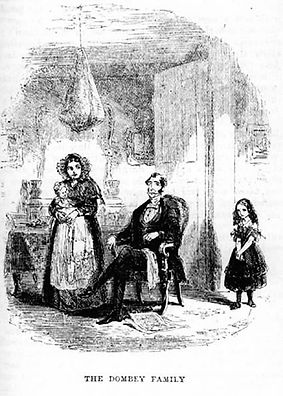
Dombey was about forty-eight years of age. Son was about forty-eight minutes. Dombey was rather bald, rather red, and though a handsome well-made man, too stern and pompous in appearance, to be prepossessing. Son was very bald, and very red, and though (of course) an undeniably fine infant, somewhat crushed and spotty in his general effect as yet. On the brow of Dombey, Time and his brother Care had set some marks, as on a tree that was to come down in good time—remorseless twins they are for striding through their human forests, notching as they go—while the countenance of Son was crossed and recrossed with a thousand little creases, which the same deceitful Time would take delight in smoothing out and wearing away with the flat part of his scythe, as a preparation of the surface for his deeper operations.
... So it goes on for a time. But Dombey and Son is a top class Dickens, and one that the feminists seem to have failed to notice. The father is obsessed by the notion of an heir to take over the family business, creating the company name of the title. His joy at the arrival of his son is immeasurable—so much so that he hardly notices the one slight drawback—that his good wife died giving birth to the boy. He certainly completely fails to notice that he already has a child, a loving daughter Florence, who is the cleverest, most competent and generally useful member of the family and one of Dicken’s most profoundly developed female characters. Father invests everything in the son, but astonishingly the boy dies halfway through the book. The scramble is on as the aging Dombey seeks a replacement heir to the business, but Florence, who actually runs everything, is never under consideration. She runs the household, runs the business, runs off the predatory women who stalk Dombey and looks after him and everything in everyway, but Dombey is inconsolable. In his senile hands, everything falls apart. The business busts and Dombey is facing ruin, but Florence solves that problem too. She finds herself a nice man, marries him and bears Dombey a grandson, an heir at last. The final scene is the same as the first.