At nights you dreamed fearful nightmares of the Mountains of the Moon, a Lost World with fortified tunnel systems as huge as those Jules Verne imagined at the Centre of the Earth, inhabited by savage warriors pouring through the galleries and over the tiers like extras on the set of a Hollywood epic. You dreamed Gulliver-like dreams where the vast swarms of little yellow men would pin you to the ground by sheer weight of numbers and drag you to the edge of a towering escarpment and, while you thrashed and flailed helplessly, they would shunt your body over the edge and send it plummeting into a bottomless abyss. The legends grew, even after you arrived at Nui Dat, where the veterans you replaced freely declared they were glad to be getting out before the Mountains of the Moon operation came up. There was a tale everyone told of a whole Battalion of Americans—Green Berets no less—who once tried to scale those awful ridgelines and disappeared without trace. Such was the mythology of the Mountains of the Moon.
All lies...
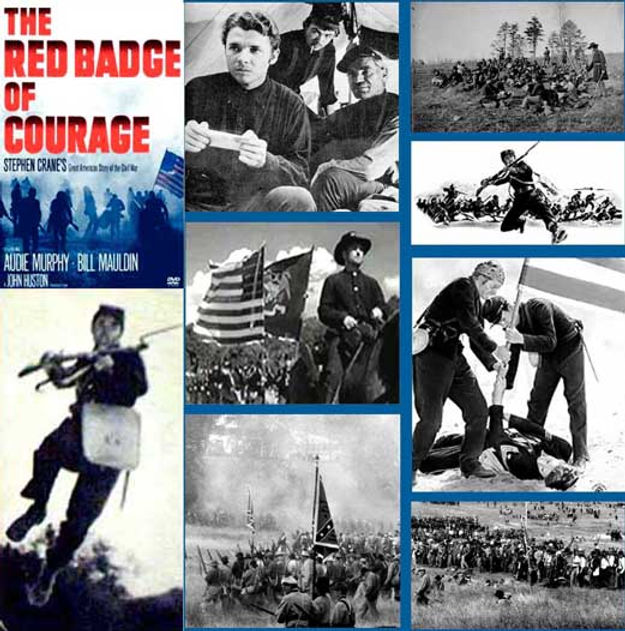
It is an interesting point that the three generally acknowledged greatest novels of men at war—All Quiet on the Western Front, War and Peace and The Red Badge of Courage—were all written by men who did not experience combat directly for themselves. Stephen Crane, writer of the third, was a journalist who never got near the front lines of the American Civil War yet no one ever offered so precise and accurate a sense of what it was to fire at other men and be fired upon.
The two sides are only ever described as blue men and grey men and they stand in lines and fire at each other, and either take flight or charge. The day before, the youth ran, only to learn that the line held. His anger at his own blue men for betraying him for a coward causes the youth to lead the charge next day, picking up the colours from a fallen comrade. The charge succeeds....
Tottering amongst them was the rival colour bearer, whom the youth saw had been bitten vitally by the bullets of the formidable volley. He perceived this man fighting a last struggle, the struggle of one whose legs are grasped by demons. It was a ghastly battle. Over his face was the bleach of death, but set upon it were the dark and hardlines of desperate purpose. With this terrible grin of resolution he hugged the precious flag to him and was stumbling and staggering in his design to go the way that lead to safety for it.
But his wounds always made it seem that his feet were retarded, held, and he fought a grim fight, as invisible ghouls fastened greedily upon his limbs. Those in advance of the scampering blue men, howling cheers, leaped the fence. The despair of the lost was in his eyes as he glanced back at them...
This is the moment of ultimate victory in the book, when the youth watches the doomed fate of his own equivalent in the enemy ranks, a fate that might have been his own had the circumstances been slightly different. As in all accurate war stories, there is no difference at all for the fighting man between defeat and victory. That is solely an affair of generals and politicians.