23. War & Pieces

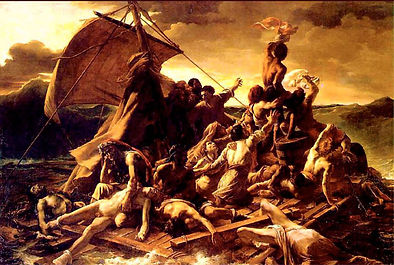
The tremendous painting by Gericault The Raft of the Medusa is said to be the inspiration behind Jules Verne’s The Survivors of the Chancellor.
The French frigate Medusa went down off the coast of Africa in 1816, and some of the survivors, having escaped on a raft, were rescued by a passing ship but only after many days of horror. However, the first half of Verne’s yarn seems closer to the actual story of the British ship Sarah Sands, which in 1857, caught fire off the African coast while on a voyage to India carrying British troops and a big cargo of gunpowder. The fires were eventually quenched by a storm but not before explosions had torn holes in the hull; still the charred wreck of the ship limped into port ten days later.
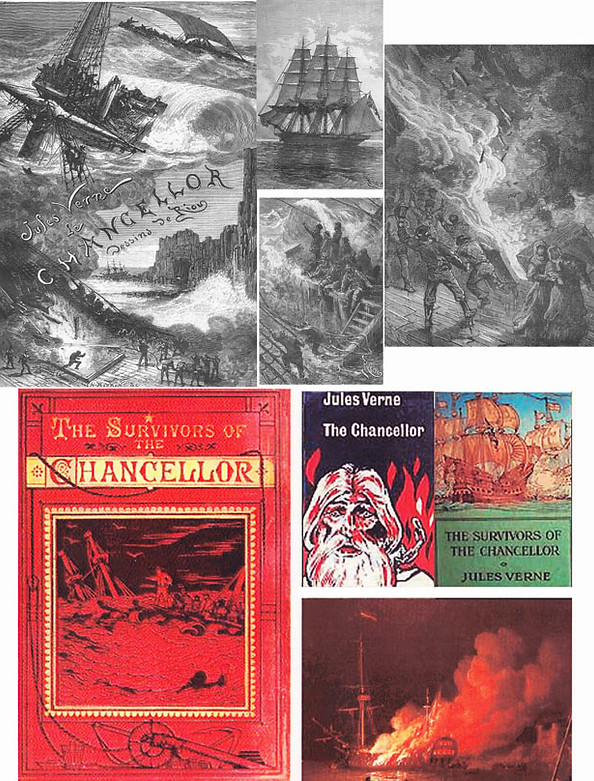
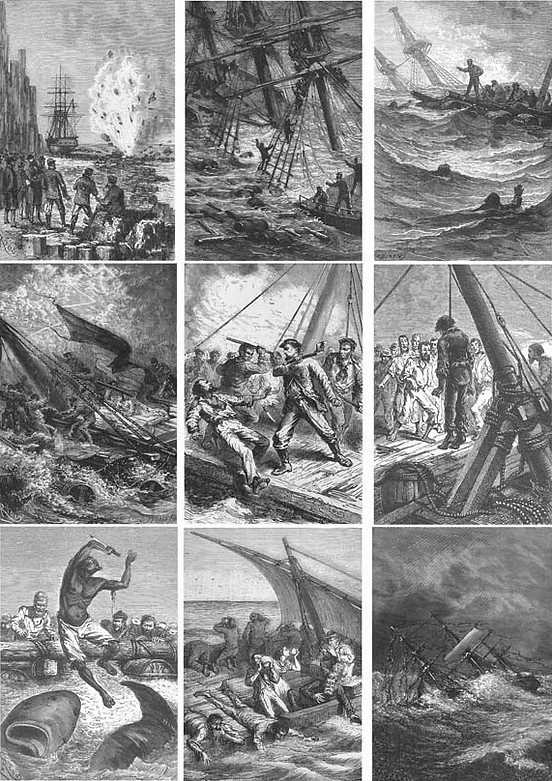
The Survivors of the Chancellor tells of such a shipwreck and the bunch of survivors on the raft enduring every imaginable hardship, shame and degradation that such circumstances can throw up. The length of the ordeal of Verne’s motley mob was for a long time considered impossible, starving, thirsting and generally going mad over a period of weeks, but these days similar survival incidents have shown it to be realistic. The Vernian twist at the end is the novel way they find fresh water in the ocean. It is not great Verne but it is more real and intense than many of his other works.
It is impossible for me to encounter the words Sarah Sands—as we did in a very minor way a moment ago—without a certain completely unrelated story coming to mind.
Despite much contrary evidence, I did manage to lose my physical virginity in the end, and had I died in Vietnam (which I didn’t), it would not have been as a “cherry boy”. It happened more simply than you imagine. One night, confined to barracks for some indiscretion of other, a bunch of us went AWOL to Melbourne, in our uniforms, all piled into one car, and went no further than the Sarah Sands Hotel.